
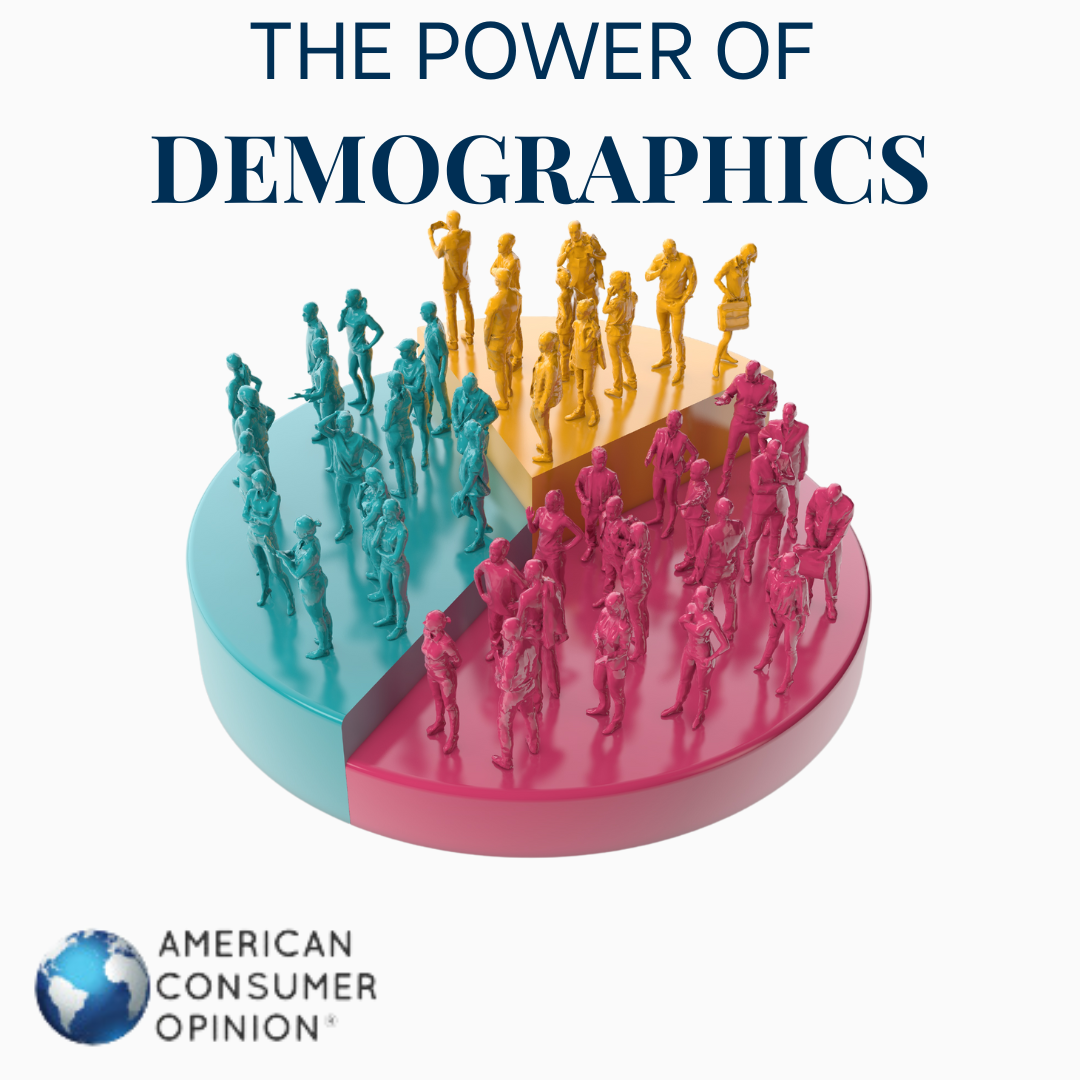
Power of Demographics
You may have heard that surveys, from follow-up questionnaires to the national census, use “demographics”. But what are demographics, and what are their uses in surveying?
Defining Demographics
Demographic data, or demographics, are statistical data about a population. Typically, they break this population down into specific categories and subgroups, such as race, ethnicity, religion, household income, employment status, and so on. This information can be anything from basic knowledge such as age and occupation to specific, personal information, such as medical history. It all depends on what the survey seeks to find out about, and what respondents are comfortable with sharing.
One person can, of course, be a part of more than one demographic. A person could be in the Asian demographic, the 25-30-year-old demographic, and the demographic of people who make over $100,000 in a year. Thus, demographic information is not a person’s identity, but rather a succinct part of it. Some demographics can also change throughout one’s life: age will naturally change, but so could marital status, number of children, geographic location, or occupation. Demographic information from person to person is very fluid, but overall it remains steadily the same.
Why are Demographics Important?
Demographics help researchers and statisticians understand and analyze a variety of things about a population or community. For the US Census, knowing the demographics of different cities, towns, and regions means that the government can make informed decisions for work done in those regions. For example, in places where there are many young married couples, the government might subsidize the building of a new school with the expectation that these couples will have children in a few years.
It is patterns like these that demographics help to highlight. It can be used for future planning, such as in the above example, or to recognize current trends and patterns right now or historically. Demographics can reveal that a disease is very prevalent among a certain age group, or that certain regions have a higher household income than others. These analyses can allow state and federal government organizations to find solutions that would best suit the people living in these regions rather than making blanket changes.
Demographics and Market Research
Demographics are just as important in market research and marketing as they are in the government. Just like how the census is used to determine the needs of certain populations, surveys are used to determine the desires of different groups. This helps companies to know best where to target their products and services. Grocery delivery might not be very popular in India or Taiwan, but it could be widely used in Japan or the Philippines. Thus, it wouldn’t make sense for a grocery store to advertise, support, and offer grocery delivery services to the same extent in all of these countries.
The use of demographic information also helps those in the demographics: the consumers. By gaining a better understanding of different groups and subgroups in the wider consumer population, marketers can make better choices when it comes to product design, product creation, advertising, and promotions. It’s why you tend to see ads for goods and services that are more appealing to you rather than something you might have no interest in. It all comes back to the power of demographics.
Demographics are always shifting. What is true today will not be true tomorrow. Just like the populations it studies, demographics are an always-growing, ever-changing research. It is an important and interesting challenge for marketers to undertake, as it helps us to not just understand consumers, products, and advertising, but the world and people around us every day.